
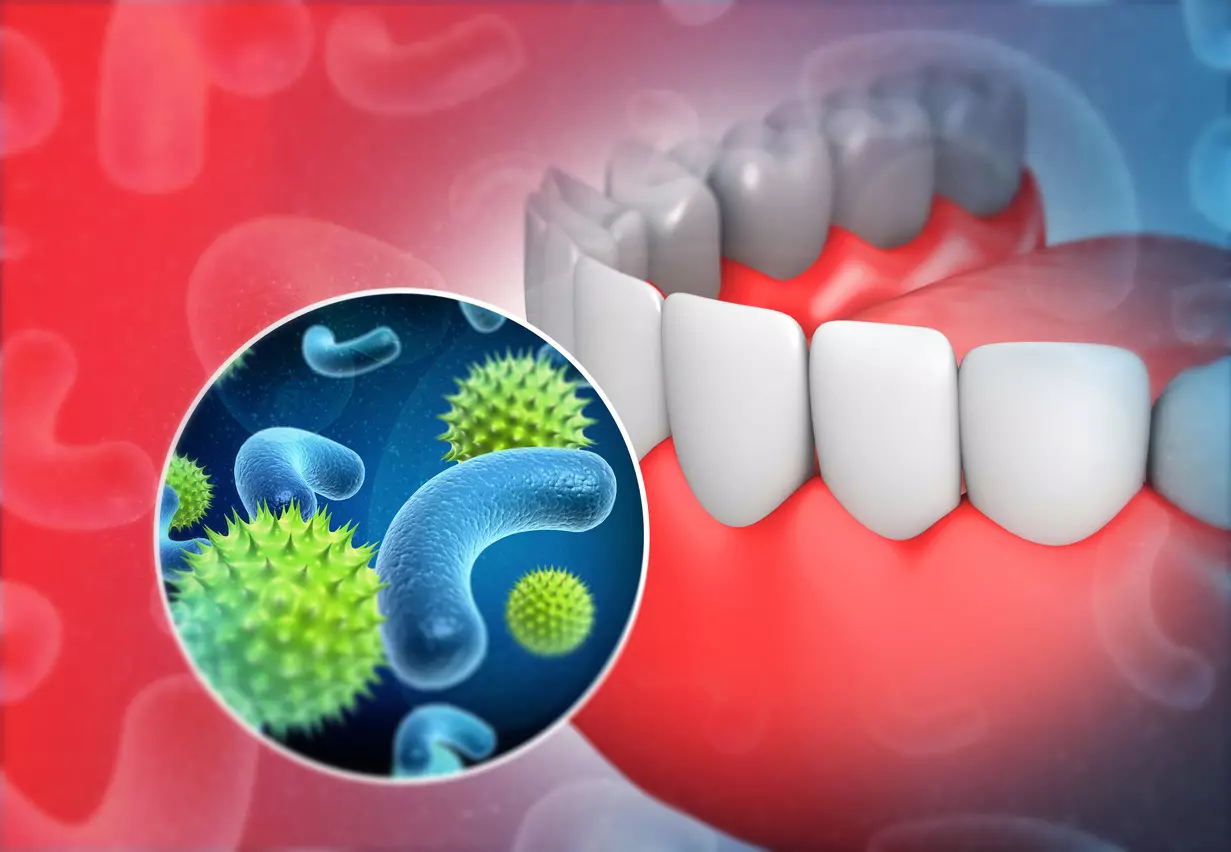
Why Does Dental Plaque Always Come Back? Science Finally Has the Answer!
The Secret of Dental Plaque: A Bacterium Capable of “Explosive” Multiplication
Your mouth is much more than just a gateway for food; it is a true microscopic metropolis. Did you know that a single milliliter of your saliva can house up to 100 million microorganisms? This fascinating ecosystem, composed of over 500 species of fungi and bacteria, forms a fragile balance upon which our global health depends.
While some bacteria protect our teeth, others are linked to serious pathologies, ranging from simple cavities to periodontal diseases, and even more severe conditions like Alzheimer’s or certain cancers. Recently, a study published in the journal PNAS highlighted a unique creature within this ecosystem: Corynebacterium matruchotii.
Multiple Fission: The Superpower of Corynebacterium matruchotii
Most bacteria multiply through classic binary fission (one cell splitting into two). However, researchers from the Marine Biological Laboratory and the ADA Forsyth institute have discovered that C. matruchotii uses a radically different and far more efficient reproductive strategy: multiple fission.
A Microscopic Speed Record
Using time-lapse imaging, scientists observed a staggering phenomenon: instead of dividing into two, a single mother cell can give birth to up to 14 new cells simultaneously.
-
Lightning Growth: These bacterial filaments can grow by half a millimeter per day.
-
Resilience: This ultra-fast proliferation explains why, despite meticulous brushing, dental plaque reforms with such persistence.
A “Tropical Rainforest” in Your Mouth
To better understand the organization of our teeth, Dr. Scott Chimileski compares the dental biofilm to a microscopic jungle. In this universe, C. matruchotii does more than just survive; it acts as an “ecosystem engineer.”
The Pillar of the Oral Ecosystem
Much like trees in a forest or corals in a reef, this bacterium creates a physical structure (shaped like a hedgehog) that serves as a foundation.
-
Exploration: Lacking flagella to move, it uses its rapid elongation to explore its environment and capture nutrients.
-
Support: Its rigid filaments provide a solid anchor for other bacterial varieties, fostering the creation of a dense and complex network.

Why This Discovery Is a Game-Changer for Your Health
This unique reproductive capability seems to be an evolutionary response to the hyper-competitive environment of the oral cavity. Understanding how C. matruchotii dominates its space is crucial for medical research.
If we can decode the mechanisms governing these biofilms, we will be better equipped to control the proliferation of harmful bacteria and prevent numerous systemic diseases. As the research team points out, the challenge now is to determine how this growth strategy directly impacts the balance of our entire body.
The exploration of our own “inner jungles” is just beginning, and it could very well revolutionize our approach to dental hygiene and preventive medicine.
View the study here.


